Marathon Shoes: Choosing the Right Running Shoes for Your Marathon
Last update Jan 6, 2026 by Etienne Durocher
Choosing marathon shoes often feels harder than choosing a training plan. One search leads to endless reviews, conflicting opinions, and shoes that promise speed, comfort, and efficiency all at once. For many runners, the result is hesitation rather than confidence.
The reality is simpler. The right marathon shoe is not the fastest-looking shoe or the most expensive one. It is the shoe that works with your body, your training volume, and your pacing strategy. When chosen correctly, it supports your effort quietly and reliably over the entire race.
This guide will help you choose marathon shoes with clarity and purpose, grounded in real training experience rather than hype.
What You Need to Know First
Marathon shoes are tools, not solutions. They reduce impact, influence running economy, and affect how fatigue accumulates. They do not replace smart training, proper fueling, or disciplined pacing.
Before focusing on brands or models, it is important to understand what matters most. Comfort is the foundation. A shoe that causes pressure, rubbing, or instability early will amplify those problems late in the race. Marathon shoes must feel good not just when fresh, but after hours on tired legs.
Cushioning, stability, and responsiveness all play a role, but none of them matter if the shoe does not fit your foot and running style. The best shoe is the one that allows you to forget about your feet and focus on execution.
This topic works alongside: Trail Running Shoes Explained
How to Choose the Right Marathon Shoes
Comfort Comes First
Comfort is not negotiable in marathon running. Small irritations become major distractions over long distances. Your shoe should feel natural from the first step, without hot spots, pinching, or instability.
Feet swell during long runs and races, so a shoe that feels slightly roomy at the start is often ideal. Heel security matters just as much as forefoot space. If you feel the need to constantly adjust laces or foot position during training, that shoe will not improve on race day.
Finding the Right Level of Cushioning
Cushioning helps absorb repetitive impact and reduce muscle damage, especially late in the race. However, more cushioning is not always better. Excessively soft shoes can feel unstable or disconnected from the ground, particularly when fatigue sets in.
Runners who train with higher weekly volume often benefit from moderate to higher cushioning, while lighter or more efficient runners may prefer a firmer feel. The goal is protection without sacrificing control. A good marathon shoe should feel supportive without feeling sloppy.
Insight
They struggle because their footwear is not aligned with their workload.
Guide Here
Stability and Neutral Shoes: A Practical View
Stability shoes are not reserved for beginners, and neutral shoes are not automatically better for experienced runners. Stability can be helpful when fatigue causes form breakdown, especially in the later stages of a marathon.
If your knees or ankles tend to collapse inward when tired, or if you struggle with late-race discomfort, a stable platform may improve efficiency and comfort. Neutral shoes work well for runners whose mechanics remain consistent even when fatigued. The key is how the shoe performs after two hours of running, not how it feels during a short test jog.
Carbon-Plated Shoes: Useful but Not Mandatory
Carbon-plated shoes can improve running economy, but they are not essential for a successful marathon. They tend to work best for runners with strong calves and good ankle stiffness who can handle the added mechanical load.
Problems arise when runners race in carbon shoes they have not trained in, or when they rely on the shoe to compensate for pacing or conditioning errors. Carbon shoes should be tested in long runs and harder efforts. If they leave your lower legs overly sore or uncomfortable, they are not the right choice for you.
Weight, Feel, and Late-Race Control
Light shoes often feel exciting early in a run, but stability and control matter far more late in the race. A slightly heavier shoe that feels predictable and stable at kilometer thirty-five will outperform a lighter shoe that feels unstable or harsh.
Marathon shoes should feel calm under fatigue. If a shoe encourages overstriding or feels awkward when tired, it will likely cost you time and comfort on race day.
Training and Race-Day Consistency
Some runners prefer using one shoe for both long runs and race day. Others rotate between a durable trainer and a lighter race shoe. Both approaches can work if the race shoe is used regularly during training.
A marathon shoe should be worn in multiple long runs, ideally including some sections at marathon pace. Race day is not the time to experiment.
More Blog to Read…
Shoe choice is only one part of marathon preparation. If you want to build confidence across all aspects of race day, these articles pair well with this guide:
Marathon Nutrition: The Carbs Loading Strategy
Together, they form the foundation of strong and controlled marathon execution.
Practical Tips for Runners
Rotate your marathon shoes during training to manage impact and reduce injury risk. Pay attention to how shoes feel after long runs rather than how they feel during short workouts. Replace shoes before they feel dead, not after. Always test socks, lacing, and race-day setup well in advance.
Above all, trust feedback from your body more than reviews or trends.
To continue building your running knowledge, read: Choosing the Proper Footwear for Running: A Guide to Injury-Free Training
Final Thoughts: Popular Marathon Racing Shoes
(January 2, 2026)
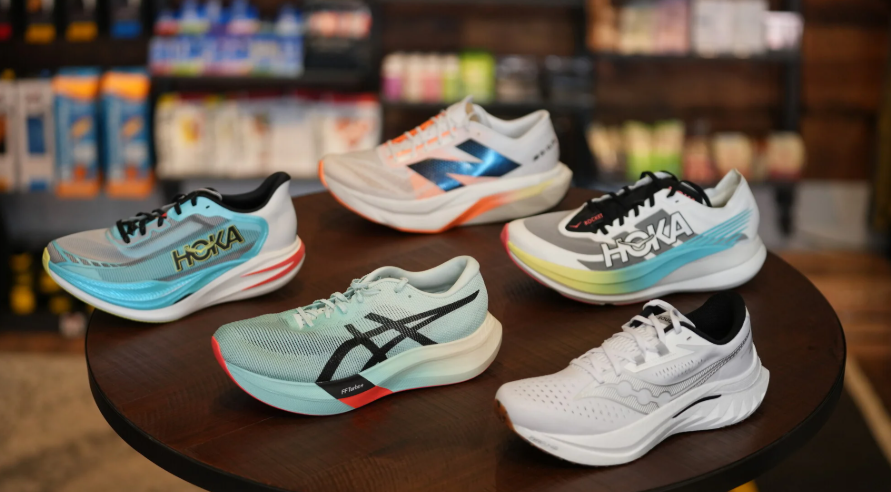
There is no single best marathon shoe, but some models are consistently popular among road racers today. Here are six widely used options, each with a clear strength and limitation.
Nike Vaporfly Next%
Pro: Extremely efficient and responsive at marathon pace.
Con: Can feel unstable for runners who fatigue laterally or lack lower-leg strength.
Nike Alphafly
Pro: Outstanding energy return and protection over long distances.
Con: Bulky feel and aggressive geometry do not suit all running styles.
ASICS Metaspeed Sky+
Pro: Excellent for runners who increase stride length as pace increases.
Con: Less forgiving at slower paces or late-race form breakdown.
ASICS Metaspeed Edge+
Pro: Works well for cadence-based runners and controlled pacing.
Con: Narrow fit can be restrictive for wider feet.
Adidas Adizero Adios Pro
Pro: Stable platform with strong energy return over long races.
Con: Firm ride may feel harsh for runners seeking more cushioning.
Saucony Endorphin Pro
Pro: Smooth transition and versatile feel across a range of paces.
Con: Slightly less aggressive propulsion compared to some competitors.
The best shoe among these is not the one with the best reputation. It is the one that matches your biomechanics, training history, and race strategy.
What marathon shoes have worked best for you, and why?
Have you noticed a difference in how shoes feel late in the race?
If you have questions about shoe choice, marathon preparation, or building a training plan that fits your life, feel free to reach out or explore more resources on Philotimo Running Coach.